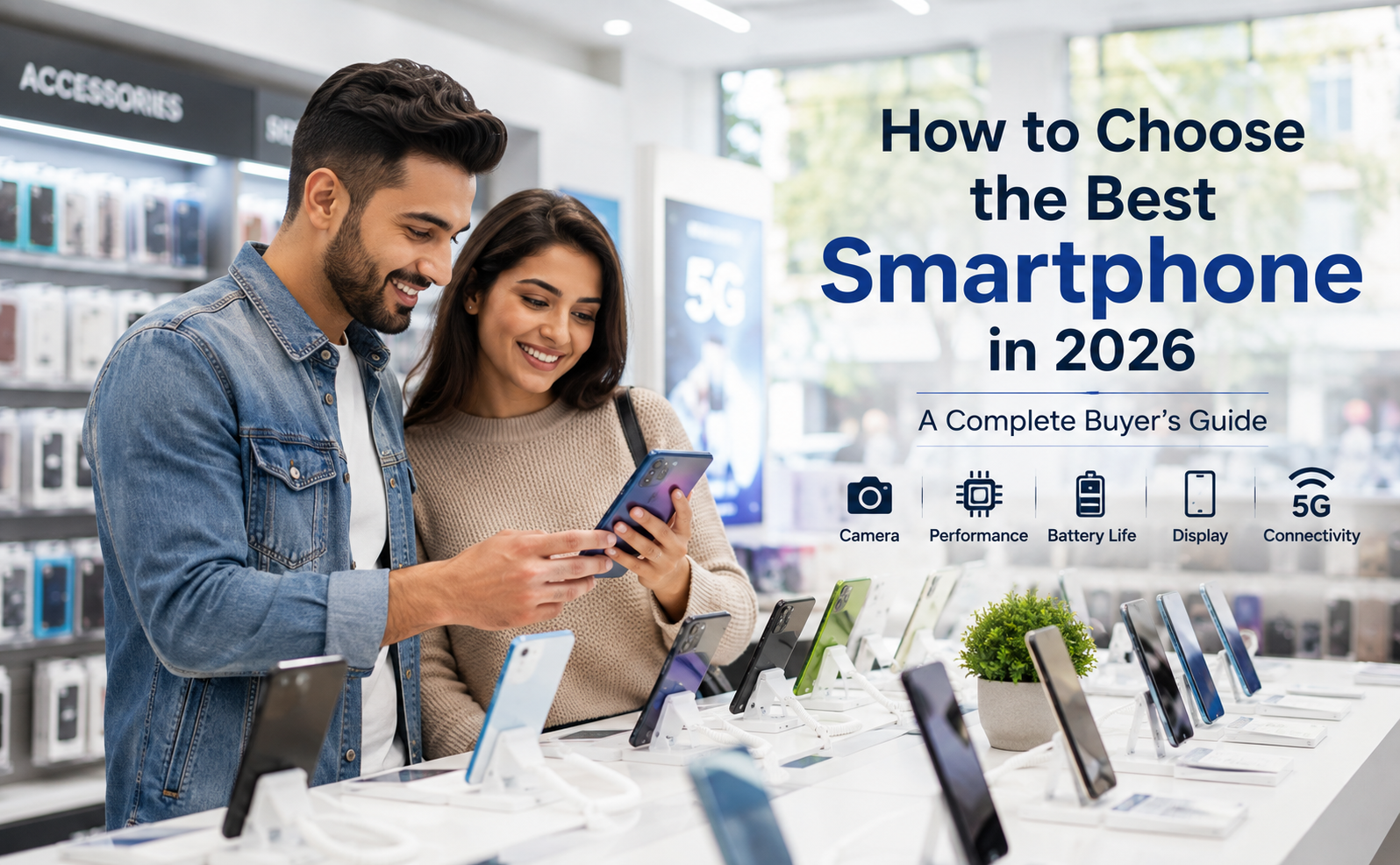
Buying a new smartphone has become more challenging than ever. With hundreds of models available, choosing the right one can feel overwhelming. Whether you're looking for a budget-friendly device or a flagship smartphone, understanding the key features will help you make the best decision.
This guide explains what to look for before buying a smartphone in 2026.
1. Set Your Budget
The first step is deciding how much you're willing to spend.
Budget Phones
- Under AED 500
- Good for basic calling, messaging and browsing
Mid-Range Phones
- AED 500–1500
- Great cameras
- Better performance
- Long battery life
Premium Phones
- Above AED 1500
- Flagship processors
- Excellent cameras
- Premium display
- AI-powered features
2. Choose the Right Display
The display affects your overall experience.
Look for:
- AMOLED display
- OLED display
- Full HD+ resolution
- 120Hz refresh rate
- High brightness for outdoor visibility
A quality display makes videos, gaming and everyday use more enjoyable.
3. Consider Camera Quality
If photography is important, compare more than just megapixels.
Check:
- Main camera quality
- Ultra-wide camera
- Telephoto lens
- Optical Image Stabilization (OIS)
- Night photography performance
- Video recording features
Choose a phone that suits your photography needs rather than focusing only on the megapixel count.
4. Processor and Performance
The processor determines how fast the phone feels.
Popular chip families include:
- Snapdragon
- MediaTek Dimensity
- Google Tensor
- Apple A-series
A newer processor generally offers better performance and power efficiency.
5. RAM and Storage
Recommended configurations:
| Usage | RAM | Storage |
|---|
| Basic Use | 6GB | 128GB |
| Daily Use | 8GB | 256GB |
| Gaming | 12GB | 256GB+ |
| Professional | 12GB–16GB | 512GB+ |
Choose storage based on how many photos, videos and apps you keep.
6. Battery Life
A larger battery usually provides longer usage.
Recommended:
- 5000mAh or more
- Fast charging support
- USB-C charging
Battery life also depends on software optimization and your usage.
7. 5G Connectivity
Buying a 5G phone can help prepare you for expanding network coverage and faster mobile data speeds where available.
8. Software Updates
Look for manufacturers that provide regular software and security updates. Ongoing support helps keep your phone secure and compatible with new features.
9. Warranty and Version
If you're buying in the UAE, check:
- Warranty details
- Whether the device is a UAE version or an international version
- Network compatibility
Understanding these details helps avoid surprises after purchase.
10. Buy from a Trusted Retailer
Choose a retailer that offers:
- Genuine products
- Clear warranty information
- Secure payment options
- Responsive customer support
- Transparent return policy
Final Thoughts
The best smartphone isn't necessarily the most expensive one—it's the one that fits your needs and budget. By comparing display, camera, processor, battery, software support and warranty, you'll be better equipped to choose a device you'll enjoy using every day.






 65.00Current price is: 65.00. (Inclusive of VAT)